

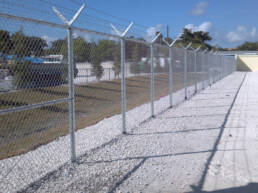
Securing a correctional facility or a critical utility site is a different job from fencing a retail lot. The fence has to slow down a determined intruder, resist cutting and climbing, and give security staff clear sightlines and controlled entry. E. Gomez Fence designs and installs high security fencing for industrial sites, correctional and secured facilities, and high-risk commercial properties across Southeast and Southwest Florida.
Owner Erick Gomez’s experience includes perimeter security projects and work with airports, ports, and public agencies. Posts, panels, and topping arms are fabricated and welded in our South Florida shop, so each system is built to the specification your site needs.
What Makes a Perimeter Security Fence Different
A standard boundary fence tells people where the property line is. A perimeter security fence is built to delay and deter. That means tighter mesh, heavier posts, deeper footings, and toppings that make climbing difficult or dangerous.
The right design depends on what you’re protecting and from whom. A storage yard worried about after-hours theft needs a different system than a facility that has to keep people inside. We start every project by asking what the fence needs to stop, then build backward from there.
Matching the Fence to Your Security Level
Not every site needs the heaviest system available. Most commercial security fencing falls into one of four levels, and many properties use more than one along the same perimeter.
- Deter: a commercial fence with barbed wire arms. It marks a clear boundary and discourages casual trespassing at storage yards and contractor lots.
- Delay: anti-climb mesh that removes hand and foot holds, so getting over the fence takes time that patrols and cameras can catch.
- Resist: anti-cut panels with razor wire toppings for sites where intruders arrive with tools, such as substations and high-value storage.
- Contain: toppings angled inward and controlled exits for facilities that must keep people inside, such as correctional and secured sites.
We’ll recommend a level for each section based on what it protects, and we’ll tell you where a lighter system is enough.
Perimeter Security Fencing Components We Install
Most high security fence systems combine several of the components below. We’ll lay out a system based on your risk level and any requirements from your insurer, agency, or security consultant.
Anti-Climb Security Fence
Anti-climb fencing uses welded mesh with openings too small for fingers or toes to grip. Without footholds, the fence is far harder to scale. It also gives security cameras and patrols a clear view through the fence line.
Anti-Cut Security Fencing
Anti-cut panels use heavy-gauge welded wire that resists bolt cutters and hand tools. Paired with anti-climb mesh, it adds time and noise to any attempt to breach the fence, which gives your team more time to respond.
Razor Wire Toppings
Razor wire coils or flat-wrap razor ribbon mount along the top of the fence to stop anyone who gets a grip on the panels. It’s common at correctional facilities, utility substations, and storage yards with a history of break-ins.
Barbed Wire Toppings
Barbed wire strands on angled arms are a lower-profile deterrent for industrial and commercial perimeters. Arms can face outward, inward, or both depending on whether the fence needs to keep people out or in.
Security Bollards
Bollards stop vehicles where a fence alone can’t. They protect storefronts, building entrances, gate approaches, and equipment from being driven into, and they guide traffic toward the entry points you control. We plan security bollards with the rest of the perimeter, so vehicle barriers, fencing, and gates work as one system.
Controlled Entry Points
Every perimeter has openings for vehicles and people, and those openings are often the weakest point. Gate operators, keypads, card readers, and intercoms are handled through our commercial gate access control service, so your entry points are planned with the rest of the system.
Clear Zones, Sightlines, and Lighting
A perimeter security fence works best when the people watching it can see it. Shrubs, stacked materials, and parked vehicles along the fence line give an intruder cover and something to climb. Where your security plan calls for it, we plan a clear zone on one or both sides of the fence and lay out the line so cameras and lighting can cover it without blind corners.
If your site already has cameras or lights, share their locations during the site assessment. Placing the fence and gates around them is far easier than moving them afterward.
Industrial Security Fencing by Property Type
From industrial fence installation at plants and warehouses to fully secured facilities, each property type calls for a different system. Here’s what each usually needs.
- Correctional and secured facilities: fencing designed to contain as well as exclude, with toppings on the inside face.
- Industrial plants and warehouses: anti-climb and anti-cut systems around equipment, materials, and loading areas.
- Utility and critical infrastructure sites: tall fencing with razor wire and clear zones for monitoring.
- Airports and ports: perimeter systems that meet operator and agency requirements for restricted areas.
- Storage yards and contractor lots: barbed or razor wire toppings that cut down on theft after hours.
Public agencies and school districts often have their own bid and documentation steps. Our government and municipal fencing page covers that process, and our who we serve page shows every type of client we work with.
Security Fencing Built for Florida Weather
A perimeter that fails in a hurricane leaves the site open at the worst possible time. Dense anti-climb and anti-cut mesh catches more wind than open chain link, so posts, footings, and spacing have to be sized for that load from the start. Near the coast, salt air also works on coatings and hardware, so finishes and fasteners matter as much as the mesh itself.
If storm damage has already opened a gap in your perimeter, our commercial and post-storm fence repair service covers assessment, repair, and replacement for commercial properties.


Upgrading an Existing Perimeter
You don’t always need a full replacement to raise security. Depending on the condition of the current fence, common upgrades include:
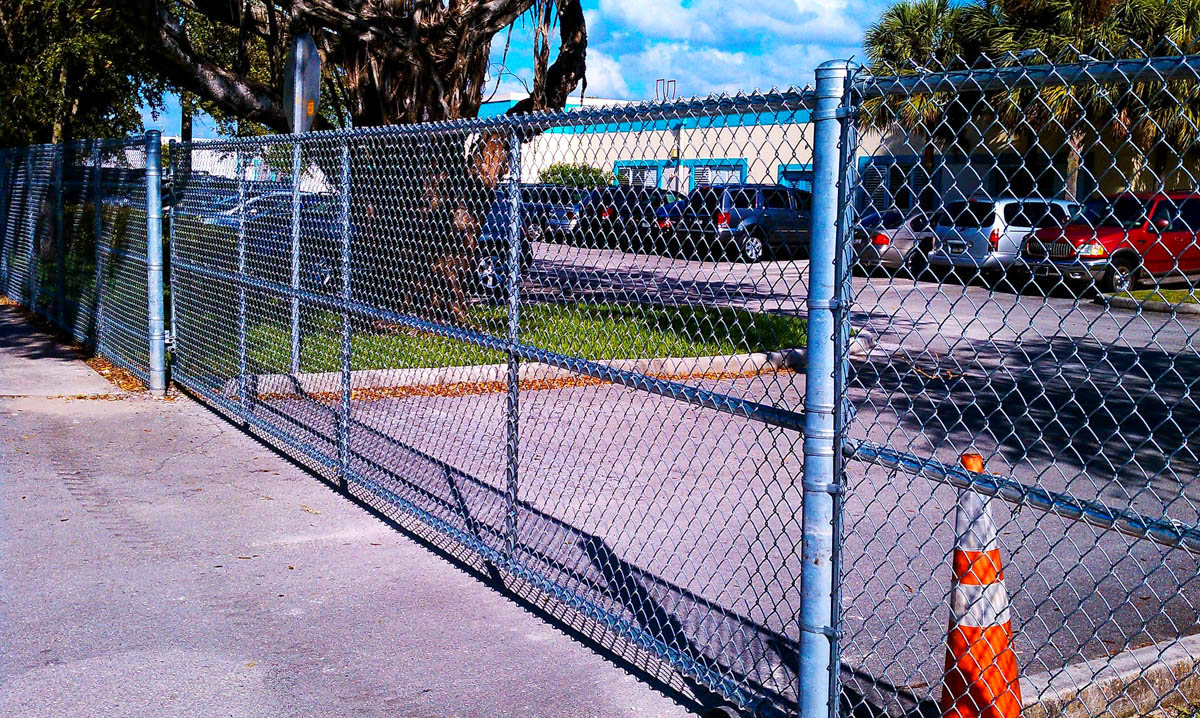
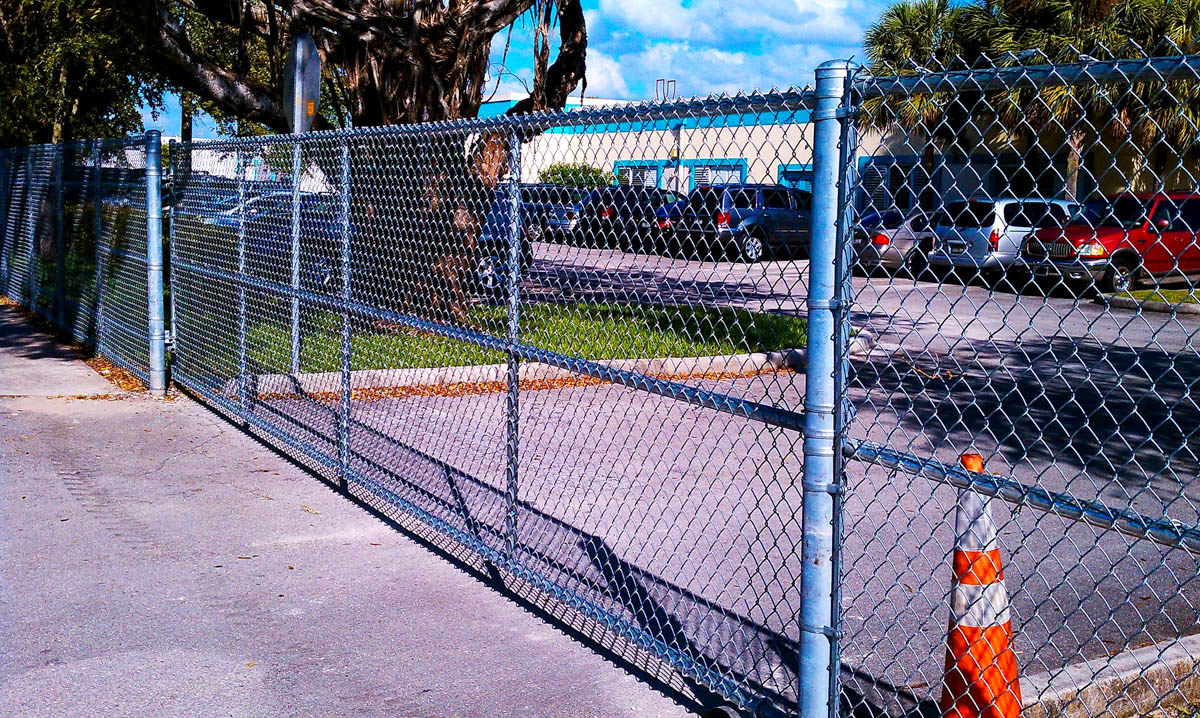
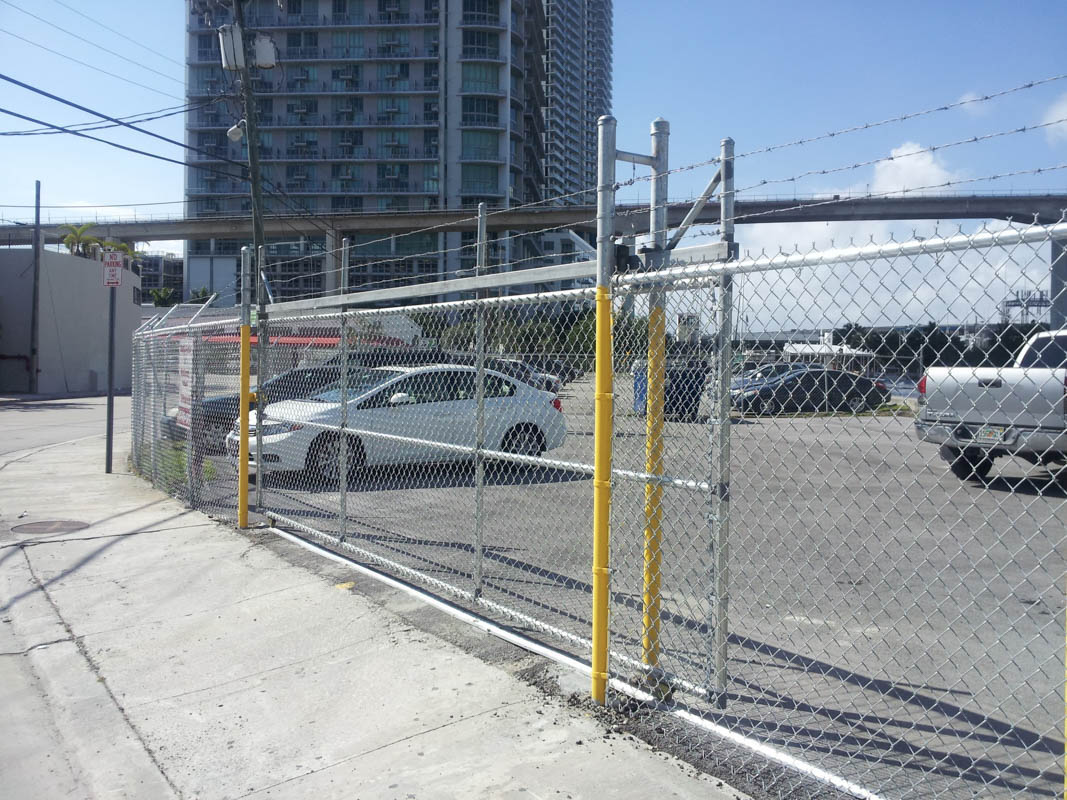
- Barbed wire arms added to an existing chain link fence for more deterrence without new fabric.
- Anti-climb panels in the sections most exposed to the street or neighboring lots.
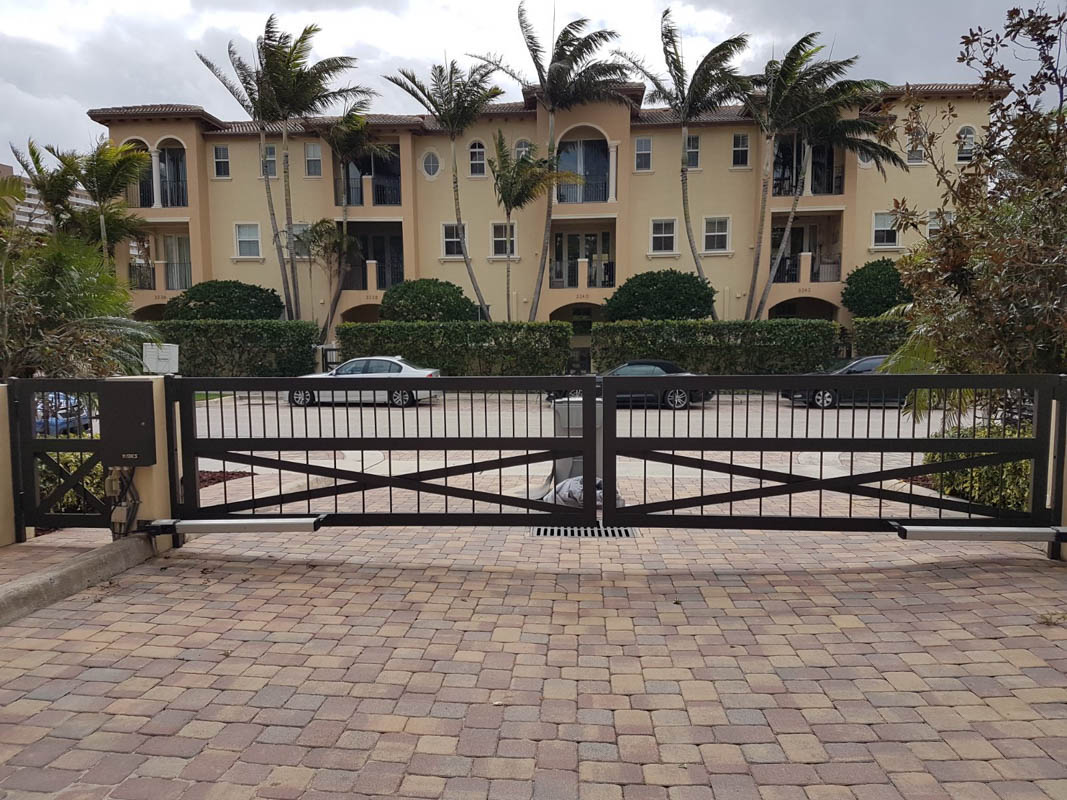
- Stronger gates and entry points, since a reinforced fence is only as secure as its weakest opening.
- Razor wire at corners and other spots where intruders tend to climb.
We inspect the posts and footings first. If they aren’t sound, adding toppings and heavier panels can create a new weak point, and we’ll tell you before you spend money on upgrades.
How We Install High Security Fencing
Perimeter fence installation on a security site needs careful planning, because the fence often has to go up around a site that stays in use.
- Site assessment. We walk the perimeter, note grade changes and blind spots, and review any security plan or specification you already have.
- System design. We lay out fence height, mesh type, toppings, and entry points, and send a written quote with a timeline.
- Permitting. A permit is obtained on all projects that require permitting, in accordance with all city requirements and regulations. Our in-house permit runner handles applications and inspections, and because some cities limit where razor or barbed wire can be used, we check those rules before the design is final.
- Building and welding. Posts, panels, and topping arms are built to your specification.
- Phased installation. Where a site has to stay secure during the work, we schedule sections so the perimeter is never left open.
- Walkthrough and warranty. Every project includes a 1-year warranty on labor and materials. Warranties can be extended upon agreement.
Need to secure a facility, yard, or industrial site? Send us the site details and we’ll schedule your free estimate. Request a quote.
Why E. Gomez Fence for High Security Fencing
Security buyers usually want three things before they award the work: proof the contractor can build to their specification, proof of comparable projects, and one team accountable for the result.
Built to Your Specification
Because components are fabricated in-house, we can adjust post sizes, panel dimensions, and topping arms to the site instead of forcing a catalog product to fit. That also keeps the schedule in our hands.
Proven on Large, Specialized Projects
For Atlas Air, the cargo airline, we built a 36-foot custom chain link partition that split a working warehouse in half, from grade to ceiling. Ask us about past industrial and government perimeter projects, and we’ll share our references list so your team can review comparable work.
Licensed, With Turnkey Project Management
E. Gomez Fence is licensed and insured under CGC1531675, and one team manages planning, timeline, and permitting from the first site walk to the final walkthrough.
Offices on Both Coasts
Perimeter projects in Broward and Palm Beach counties are led by our Fort Lauderdale office, and projects in Lee and Collier counties by our Pine Island office in Bokeelia. For standard boundary fencing on the same property, see our commercial fence installation service.
Perimeter Security Fencing FAQ
Anti-climb fencing is a welded mesh fence with openings too narrow to grip with fingers or the toe of a shoe. Because there’s nothing to hold, it’s very difficult to climb. It’s widely used at correctional facilities, utilities, and industrial sites.
Anti-climb mesh is made to be hard to grip, so it slows anyone trying to go over the fence. Anti-cut panels use heavier welded wire that resists bolt cutters and hand tools, so it slows anyone trying to go through. High-risk sites often combine both.
Height depends on the risk level and any requirements from your agency, insurer, or security plan. Most high security systems are taller than a standard commercial fence and add a topping such as razor wire or barbed wire. We’ll confirm the height during the site assessment, along with any clear zone you need on either side of the fence.
Often, yes. Barbed wire arms, anti-climb sections, and stronger gates can raise security without a full replacement, as long as the existing posts and footings are sound.
Yes. We inspect and maintain perimeter security fencing on commercial and industrial properties, whether or not we installed it originally. That includes checking razor wire tension, anti-climb panels, posts, and fasteners so weak spots are fixed before someone finds them.
A damaged perimeter leaves the site exposed, so it should be assessed quickly. We repair and replace storm-damaged security fencing on commercial properties, and we can rebuild a section to a higher standard if needed.
Yes. Estimates are free, including the site walk where we review the perimeter, entry points, and any security plan you already have.
Timing depends on the length of the perimeter, the components involved, and permit review. Sites that must stay secure during the work are installed in phases, which adds planning but keeps the property protected. Your quote includes a timeline.
Start With a Site Walk
Tell us what the fence needs to protect, any requirements from your insurer or security consultant, and where the site is. We’ll walk the perimeter, recommend a security level for each section, and send a written quote with a timeline.
Ready to secure your facility? Request a quote for high security fencing, and our team will follow up.