
Commercial properties across Florida rely on a handful of fence types, and each one handles security, appearance, and storm season in its own way. A warehouse yard, a retail plaza, and an apartment community may all need a fence, yet the right choice for each looks very different. The decision usually depends less on the material itself and more on what the fence has to do on your property.
In this guide, we walk through the seven main types of commercial fencing, how different Florida properties use them, a few specialty applications most guides skip, and where each type tends to fail when a storm comes through. If you are already comparing options, our commercial fence installation page explains how we plan and build these projects from start to finish.
The 7 Main Types of Commercial Fencing in Florida
Most commercial fencing in Florida falls into seven categories. Here is how each one works and where it usually fits.
1. Chain Link
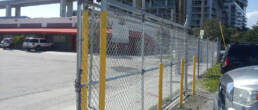
Heavy-gauge galvanized or vinyl-coated mesh on steel posts. Chain link is the most common choice for industrial sites, storage yards, and long perimeters because it is strong, covers long distances, and keeps sightlines open. Slats or wind screen can add screening, and our guide to chain link fence with privacy slats explains how that changes the way the fence handles wind.
2. Aluminum
Picket-style panels with a powder-coated finish. Aluminum won’t rust, so it is popular near the coast, around water features, and anywhere the fence faces tenants or customers every day.
3. Ornamental Iron and Steel
Heavier picket fencing with a traditional look. It is strong and decorative, but it needs a protective coating and periodic upkeep in salt air.
4. Wood
Board, shadowbox, or picket fencing with a warm look and solid screening. Wood needs sealing to slow rot in humid weather, and damaged boards can be replaced one at a time.
5. Vinyl
Solid or picket panels that never need paint. Vinyl is low maintenance and gives a clean, uniform look, which makes it a common pick when full privacy is the goal.
6. Composite
A blend of wood fibers and plastic that looks like wood while resisting moisture and insects. Panels are heavy and usually solid, so post setting matters.
7. High-Security Mesh
Welded anti-climb and anti-cut panels, often topped with razor wire or barbed wire, for sites that need to stop intruders. Our perimeter security fencing page shows how these systems come together.
Commercial Fencing Applications by Property Type in South Florida
Industrial yards and warehouses put security and durability first. Chain link covers long perimeters, and high-security mesh adds protection where theft or trespass is a concern. Gates have to handle heavy truck traffic every day, and many sites add controlled entry so only authorized drivers get through.
Retail centers and dealerships balance appearance with protection. The front of a plaza is part of the shopping experience, so owners often choose aluminum or ornamental iron along the road, while chain link or screened fencing hides loading and service areas behind the buildings. Dealerships follow a similar pattern, with a finished fence at the frontage and heavier fencing around service and storage lots, so inventory stays protected after hours without the lot looking closed during the day. Restaurants lean on wood, vinyl, composite, or aluminum to define outdoor dining and screen kitchen entrances, and corporate campuses often add separate entries for employees, visitors, and deliveries.
Apartment communities and associations need fencing that looks consistent across a large site and holds up with little maintenance. Aluminum and iron are common at entrances and amenities, and vinyl appears where privacy matters. Many communities set panels between brick or concrete columns, and much of our HOA and community fencing work involves adding sections to an existing fence line. A close match is usually possible, though products change over the years and older fences and columns weather and develop a patina.
Equestrian and estate properties rely on 3-rail ranch fence, estate fencing, and field fence with wire mesh, often over long distances. Our agricultural and ranch fencing page covers those options in more detail.
Specialty Commercial Fence Solutions Most Guides Skip
Not every commercial fence is a perimeter. A few applications come up often enough on Florida properties that they deserve a place in the plan from the beginning:
- Interior partitions: Chain link can divide space inside a building, separating storage, equipment, or secured inventory from the rest of a warehouse. Custom heights, including runs from the floor to the ceiling, are possible when the structure allows it.
- Sports fencing with netting: Ball fields need tall chain link and netting working together, with long runs and tall sections that have to stay aligned through daily use and summer storms.
- Large service and dumpster enclosures: Concrete walls with a privacy gate screen compactors and service yards from customers and neighbors. We build these when the enclosure is larger than 10 by 20 feet.
- Security bollards: Steel posts stop vehicles at storefronts, entrances, and equipment. They protect without enclosing anything, so they often pair with a fence rather than replacing one.
- Automated gates and controlled entry: Vehicle and pedestrian gates that open by keypad, phone app, remote, or intercom turn a fence line into a managed entrance. Our commercial gate access control page explains how those systems work.
Planning these items alongside the main perimeter keeps layouts, gate openings, and permit drawings in one package, which helps avoid change orders once installation starts. It also lets one team coordinate concrete work, gate hardware, and fence runs so each piece lines up with the others. Many of these specialty items are fabricated in our South Florida shop, which keeps sizing and timing in our hands.
Where Each Commercial Fence Type Fails in a Florida Storm
Every material has strengths and weak spots in a Florida storm, and none of them is the right answer for every property. Chain link lets wind pass through its open mesh, but flying debris can dent the fabric, and slats or wind screen add a large amount of wind load. Aluminum pickets stay open to the wind and won’t rust, yet the lighter metal can bend when debris hits it. Ornamental iron stands up well to impact, though it needs a sound coating to resist rust after saltwater exposure.
Solid fences face the most force. Wood panels catch wind and can rot in humid weather, although damaged boards are replaced individually. Vinyl holds its look without paint, but solid panels catch wind and can pull loose from their posts. Composite resists rot and insects, and its weight means posts have to be strong. High-security mesh resists a breach, yet its tight weave catches more wind than chain link, and toppings need secure mounting.
Installation matters as much as material. Post depth, footing size, post spacing, and bracing often decide whether a fence survives. Erick Gomez, who leads our team, points to the same causes when fences fail: shallow posts, saturated ground, wind load on solid or screened panels, undersized materials and hardware, flood debris and floating structures, and corrosion.
We are a Certified Hurricane Relief & Disaster Contractor, with post-storm fence repair in Pine Island, Upper Captiva Island, and Fort Myers, both before and since Hurricane Ian (2022), led from our Bokeelia office on Pine Island. For a closer look at storm performance, read our guide to the best fence for hurricanes.
Is There a Best Commercial Fence for Florida Properties?
There is no single best commercial fence for every Florida property. The right choice balances a few practical factors, and the weight of each one changes from site to site.
Security Needs
Start with what the fence has to stop. Some properties only need to mark a boundary, while others need to slow intruders, control vehicles, or protect inventory overnight. Higher security usually points toward heavier mesh, toppings, and controlled gates.
Appearance Standards
Fences that face customers, residents, or a main road often need a finished look. Landlords, associations, and some cities also set standards for color, style, and height that narrow the options.
Maintenance and Upkeep
Think about what your property team can realistically handle. Some materials need sealing or coating on a schedule, while others need little more than an occasional inspection.
Wind and Coastal Exposure
Sites near open water or with few windbreaks face more wind and salt air, which affects both the material and how the posts are set. Properties on the Gulf Coast and along the Atlantic shoreline often call for coated hardware, closer post spacing, and deeper footings, whatever material is chosen.
Budget and timeline play a role too, since some materials take longer to fabricate or install over long runs. A warehouse and an apartment community may need completely different fences, and many properties use more than one type. We walk through these tradeoffs with you and install whichever material you choose. Across Broward and Palm Beach counties, our Fort Lauderdale fence company office leads that planning for commercial and community projects.
Questions to Answer Before You Choose a Commercial Fence
Before comparing materials or proposals, it helps to settle a few things with your team. Clear answers make it easier to match the right fence type to your property and to get estimates you can compare side by side. Share these answers with any contractor you talk to, along with a site plan or survey if you have one.
- What does the fence have to stop: people, vehicles, views, or all three?
- Who sees it every day: customers, residents, tenants, or only staff?
- How much upkeep can your property team realistically handle each year?
- How exposed is the site to wind, flooding, and salt air?
- Does the project need gates, controlled entry, bollards, or screening?
- Are there landlord, association, or city requirements the fence has to meet?
- Will the new fence connect to an existing fence or columns that need a close match?
- Is there a deadline to plan around, such as a tenant opening, a board meeting, or the start of storm season?
Request a Quote for Your Commercial Fence Project
Choosing among the types of commercial fencing gets easier once someone walks the property with you. Our team will visit the site, measure the fence line, talk through security, appearance, and storm exposure, and put materials, layout, and a timeline in writing. Our in-house permit runner handles the permit on every project that requires one, and every project includes a 1-year warranty on labor and materials. Estimates are free, and we can review plans, specifications, or bid documents before the visit. When you are ready, request a quote and the office that serves your area will follow up to schedule a site visit.
Ready to Plan Your Fence Project?
Whether you’re securing a commercial property, updating a community perimeter, or adding a new fence at home, our team can take your project from planning to installation. We handle a permit pulled on every project that requires one. Every project includes a 1-year warranty on labor and materials. Warranties can be extended upon agreement.
Our Fort Lauderdale and Pine Island offices serve properties across Southeast and Southwest Florida. Tell us about your property and request a quote, and the right office will follow up.
Like this article? Spread the word!
Related Posts
November 4, 2026
The Best Fence for Hurricanes Isn’t What You Think
No single material is the best fence for hurricanes. Learn why Florida fences fail in…
November 4, 2026
Chain Link Fence With Privacy Slats: The Hidden Storm Risk Most Owners Miss
See when a chain link fence with privacy slats makes sense in Florida and how slats…