
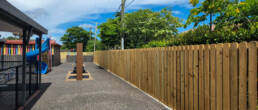
Every hurricane season, property managers and owners ask the same question: what is the best fence for hurricanes? The honest answer surprises most people. No single material wins. The fences that hold up best are the ones designed for wind and installed correctly, whatever they are made of.
Florida’s recent storms make the question practical. Irma crossed the state in 2017. Ian made landfall as a Category 4 near Cayo Costa in 2022, just off Pine Island, close to our Bokeelia office on Pine Island. Helene and Milton followed less than two weeks apart in 2024. In this guide, we explain why fences fail in hurricanes, what installation does about it, how common hurricane fence options compare, and what to ask before your next project.
What Is the Best Fence for Hurricanes in Florida?
The best fence for hurricanes is one that either lets wind pass through or is built to carry the wind it catches. Open designs such as chain link, aluminum, and iron pickets face less wind pressure than solid panels because air moves through them. Solid fences can perform well too, but only when their posts, footings, and spacing are sized for the load they will carry.
That is why two fences made of the same material can have completely different outcomes in the same storm. One aluminum fence may stand untouched while another down the street leans or pulls out of the ground, and the difference usually traces back to post depth, footing size, soil conditions, and hardware rather than the pickets themselves. The same is true for vinyl, wood, and chain link. In most storms, the material is rarely the first thing to give way. The connection between the fence and the ground usually goes first.
For Florida commercial and community properties, the practical question is less about which material to choose and more about how the whole fence system is designed. Wind exposure, flood risk, soil type, fence height, and any screening all shape what the posts and footings need to handle. A low aluminum fence in a sheltered courtyard and a tall screened perimeter along open water call for very different construction, even if both are labeled storm ready.
Material still matters for appearance, security, upkeep, and salt air. Our commercial fence installation team walks through those tradeoffs with you and installs whichever material you choose, with the structure planned for Florida wind from the start.
6 Reasons Fences Fail in a Florida Hurricane
Erick Gomez, who leads our team, points to the same short list of causes when fences go down in a storm:
- Shallow posts: A post that isn’t set deep enough for its height and load has nothing to hold it once the wind pushes the fence.
- Saturated ground: Heavy rain and surge soften the soil around posts, so footings that hold in dry conditions can lean or pull out.
- Wind load on solid or screened fences: Solid panels, privacy slats, and wind screen turn a fence into a sail and multiply the force on every post. Our guide to chain link fence with privacy slats explains how screening changes that load.
- Undersized materials and hardware: Thin posts, light rails, and brackets or fasteners not rated for the load give way at the connections first.
- Flood debris and floating structures: Surge and flooding carry lumber, docks, boats, and other debris into fence lines. A floating structure can push over a fence that would have survived the wind on its own.
- Corrosion: Salt air and standing water weaken posts, fasteners, and hardware over time, so a fence that looks fine can fail where its parts connect.
Most of these causes are invisible on a calm day. A fence can look straight and solid for years while its footings, fasteners, or post bases quietly lose strength, which is why storm damage often surprises owners whose fences seemed fine the week before. Several causes also tend to stack up in the same storm: saturated soil weakens a footing at the same moment wind load peaks on a screened panel, and a corroded fastener gives way under force it once handled easily.
How Installation Answers Each Cause
Most of those failure causes are decided before the first panel goes up. A storm resistant fence starts with structural details, and those details matter before the material is even chosen.
Post depth and footing size come first. Both should match the fence height, the panel type, and the soil on site, since sandy or frequently saturated ground needs more support than firm soil. Post spacing comes next. Solid and screened fences catch more wind, so tightening the spacing means each post carries less panel and less force.
Corners and gates need extra bracing because wind pressure concentrates at the ends of a fence line and at openings. Hardware and fasteners should suit coastal conditions, and steel and iron need protective coatings to slow corrosion from salt air. Drainage around posts matters too, so water doesn’t sit at the footing after heavy rain and soften the ground that holds the fence upright.
Local requirements shape these details as well. Many Florida cities and counties require a permit for commercial fences, and plan reviewers may look at post depth, height, and wind design. Across Broward and Palm Beach counties, our Fort Lauderdale fence company office prepares that paperwork through our in-house permit runner, and we obtain a permit on every project that requires one. Getting the structure right on paper first is what lets the finished fence hold up when the wind arrives. It also gives your property team a clear record of how the fence was built, which helps when planning repairs, adding screening later, or answering questions from an insurer.
How Common Hurricane Fence Options Compare
Each material has storm strengths and weaknesses, and none of them is the right answer for every property. Here is how the most common hurricane fence options compare.
Chain Link
- Pros: Open mesh lets wind pass through, and damaged fabric can often be replaced in sections.
- Cons: Debris can dent fabric and bend top rails, and slats or wind screen add a large amount of wind load. Wind screen can usually be taken down before a storm, while slats usually stay.
Aluminum
- Pros: Open pickets reduce wind load, and aluminum won’t rust in salt air.
- Cons: It is lighter than steel or iron, so direct hits from debris can bend pickets.
Ornamental Iron and Steel
- Pros: Heavy and strong against impact, with an open design.
- Cons: Needs a protective coating and upkeep to prevent rust, especially after saltwater exposure.
Solid Panel Fences
Wood, vinyl, and composite privacy fences all present a solid face to the wind.
- Pros: Full privacy and screening, and many styles can be installed with heavier posts and closer spacing to carry the load.
- Cons: Solid panels catch the most wind of any fence type, so they depend heavily on post setting and spacing to stay upright.
High-Security Mesh
- Pros: Rigid welded panels resist a breach and stay aligned under impact better than lighter fabric.
- Cons: Tight mesh catches more wind than chain link, and razor wire or barbed wire toppings need secure mounting.
For a property-by-property look at materials, see our guide to the 7 types of commercial fencing.
Gates and Post-Storm Recovery for South Florida Properties
A long gate is often among the first things to fail in a hurricane. A wide swing gate acts like a sail, putting enormous force on its hinges and posts. On commercial entrances, sliding and cantilever gates are often used for wide openings because they don’t swing out against the wind. Automated gates add another consideration, since operators, sensors, and keypads sit low and can be damaged by flooding or debris. Whatever the style, gate posts need extra depth and bracing, and latches and hinges should be rated for the gate’s weight and size. Our custom gates are fabricated in our South Florida shop and sized to the exact opening, which lets us plan the posts and hardware around the gate rather than the other way around. For automated entrances, our team can also plan how the gate will be secured or opened manually if power goes out during a storm.
When a storm does cause damage, recovery planning matters. We are a Certified Hurricane Relief & Disaster Contractor, with post-storm fence repair in Pine Island, Upper Captiva Island, and Fort Myers, both before and since Hurricane Ian (2022). After a hurricane, both of our offices handle removal, reinstallation, and replacement of damaged fence for businesses and communities, including fences another company installed, and we document the damage for your insurance claim. Small fixes, like a single gate or latch, aren’t part of that work. Taking photos of your fence before hurricane season gives you a clear before-and-after record if you ever need to file a claim. Learn more on our commercial and post-storm fence repair page.
A Storm Resistant Fence Checklist
Before your next fence project, ask your contractor these questions. The answers show whether the fence is being designed for Florida wind or simply installed to look good on day one. A contractor who has planned for wind should be able to answer each one clearly and put the details in writing.
- How deep will the posts be set, and how large are the footings?
- What post spacing will you use for this material and height?
- How will corners and gates be braced?
- Are fasteners and hardware suited for coastal conditions?
- Is the design right for my site’s wind exposure and flood risk?
- If we add slats or wind screen, has the fence been designed for that load?
- How will water drain away from the posts after heavy rain?
- Will the gates be braced and hinged for their full weight and width?
- If the fence is damaged later, can you document it for insurance?
Request a Quote for a Fence Built for Florida Storms
No fence is storm-proof, but the design and installation decisions above give your property its best chance of staying secure through hurricane season. Our team will walk the site, review wind exposure, soil, and drainage, and put materials, layout, and a timeline in writing. Our in-house permit runner handles the permit on every project that requires one, and every project includes a 1-year warranty on labor and materials. Whether you need a new perimeter, a replacement after storm damage, or screening added to an existing fence, the planning starts the same way. Estimates are free. Request a quote and the office that serves your area will follow up before the next storm.
Ready to Plan Your Fence Project?
Whether you’re securing a commercial property, updating a community perimeter, or adding a new fence at home, our team can take your project from planning to installation. We handle a permit pulled on every project that requires one. Every project includes a 1-year warranty on labor and materials. Warranties can be extended upon agreement.
Our Fort Lauderdale and Pine Island offices serve properties across Southeast and Southwest Florida. Tell us about your property and request a quote, and the right office will follow up.
Like this article? Spread the word!
Related Posts
November 4, 2026
Chain Link Fence With Privacy Slats: The Hidden Storm Risk Most Owners Miss
See when a chain link fence with privacy slats makes sense in Florida and how slats…
November 4, 2026
7 Types of Commercial Fencing
Compare 7 types of commercial fencing, which Florida properties use each, and where each…